Kama Lounge Experience
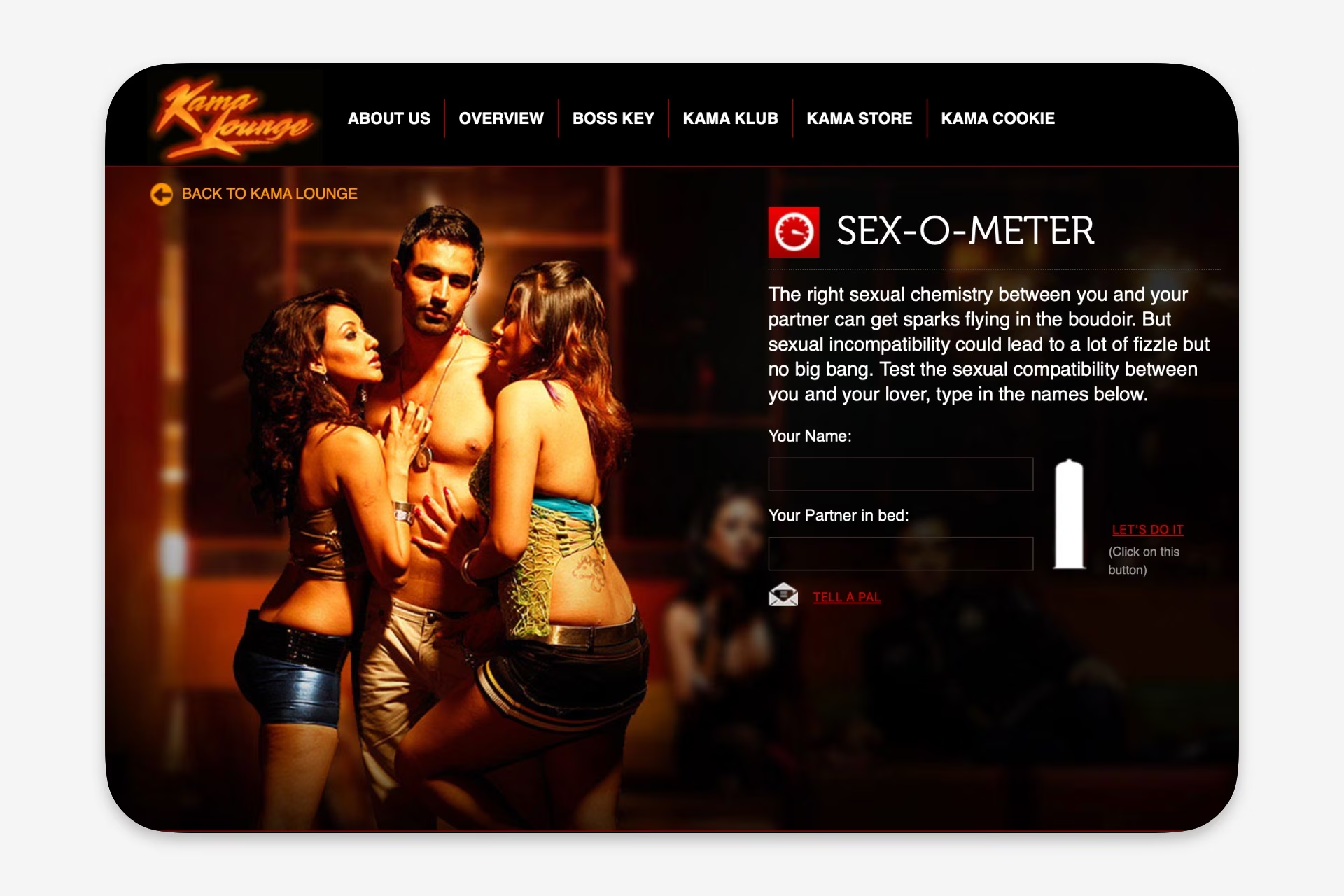
In 2013, I worked with Interface Communications on Kama Lounge, an interactive brand website by Kama Sutra. It became one of the first websites in India to move a complete immersive experience from Flash to HTML5. The challenge was to preserve the character of the original while rebuilding it for the open web with HTML5, CSS, JavaScript, and ASP.NET MVC.
Results
- Kama Lounge became one of India’s earliest full-scale Flash-to-HTML5 website migrations.
- A cinematic, horizontally explorable lounge was preserved as the site’s main interaction and discovery model.
- Games, polls, profiles, uploads, audio, video, and moderated community features were brought together in one connected web experience.
Date
Team member
Amit Chakor
Organisation
Interface Communications
Why Steve Jobs turned against Flash
Rich brand websites of the period were commonly built in Adobe Flash. That made animation, sound, video, and game-like interfaces possible, but it also tied the experience to a proprietary browser plugin. Apple never supported Flash on the iPhone after its 2007 launch, and the conflict reached a defining moment after the iPad arrived without it in 2010.
On 29 April 2010, Steve Jobs published Thoughts on Flash, explaining why Apple would not allow Flash on the iPhone, iPod touch, or iPad. He argued that Flash was proprietary, unreliable, insecure, inefficient with battery power, designed around a mouse rather than touch, and an unnecessary layer between developers and Apple’s platforms. His position was that open standards such as HTML5, CSS, and JavaScript were better suited to the mobile web.
Jobs did not kill Flash overnight, but Apple’s refusal to support it on the devices reshaping the internet made its lack of a mobile future impossible to ignore. Adobe announced Flash’s retirement in July 2017, ended support on 31 December 2020, and blocked Flash content from running in January 2021. By rebuilding Kama Lounge in 2013, we were acting years before that formal end-of-life.
Kama Lounge was an early Indian example of this transition. The assignment was not a visual redesign. It was a ground-up technical migration that had to retain the atmosphere, exploration, and playful interactions of the original while replacing the technology underneath.
Rebuilding the lounge as an interface
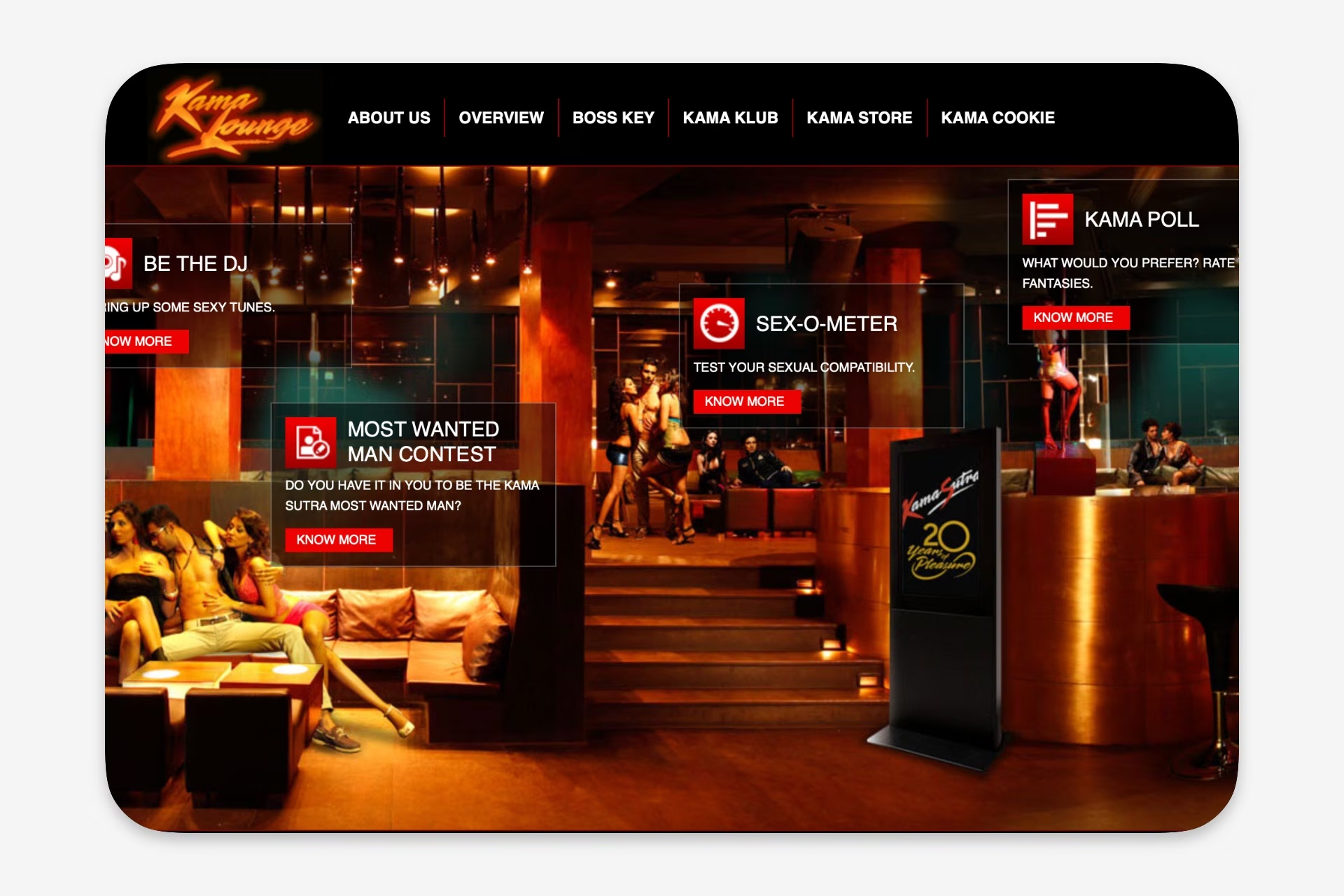
The homepage was designed as a 4,089-pixel-wide virtual lounge rather than a conventional stack of pages. Visitors moved horizontally through a photographic environment and discovered features through hotspots embedded into the scene. Hover states revealed contextual cards, while quick links provided a faster route for people who already knew where they wanted to go.
Each destination opened as a layered view inside the same shell. jQuery-powered transitions and AJAX-loaded partial views made the experience feel continuous, avoiding the hard page changes that would have broken the illusion of moving through a single place.
More than a visual port
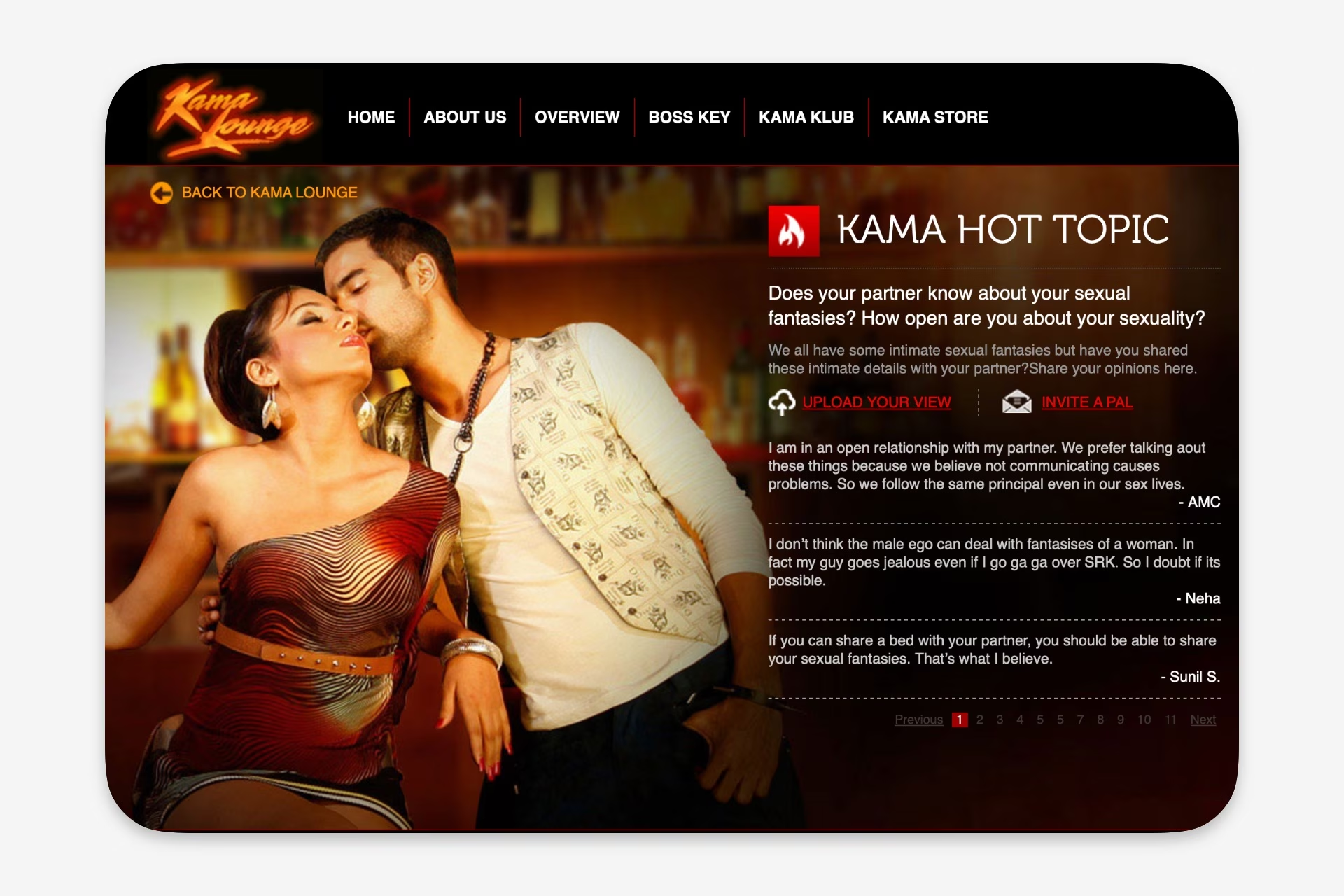
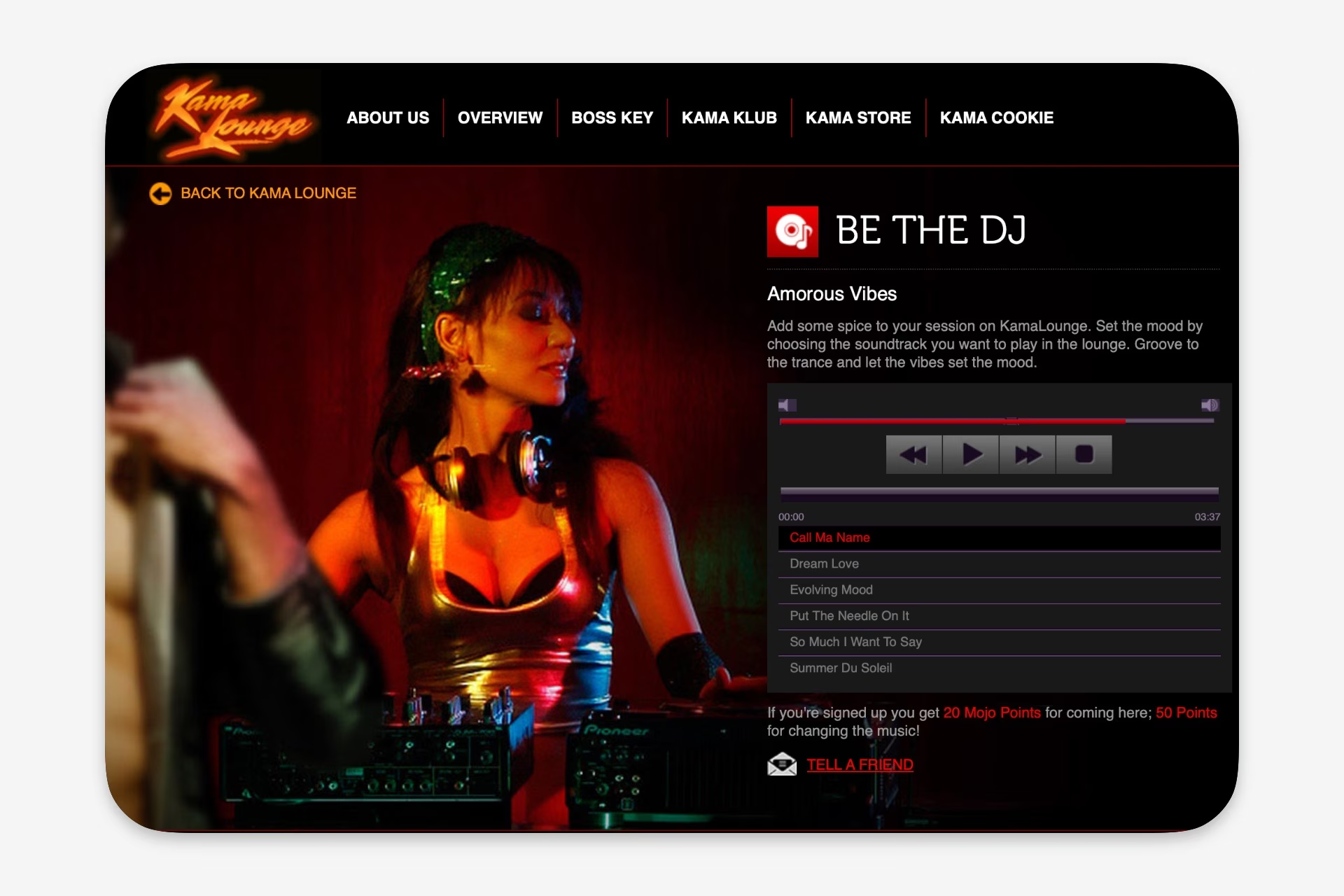
The site combined branded editorial content with interactive features including Be The DJ, Sex-O-Meter, Kama Poll, Kama Calendar, Couple Hunt, Kama Positions, Kama Tapes, downloads, and a members’ club. Media playback used browser-based players, while forms and AJAX endpoints supported registration, login, uploads, polls, comments, and a points-based “Mojo” system.
An ASP.NET MVC 2 backend organised these experiences as controllers and partial views. XML-backed repositories and moderation screens supported user profiles and community submissions. This made the HTML5 version a functional web application, not simply a collection of recreated screens.
Outcome
Kama Lounge demonstrated that a branded experience did not need Flash to feel immersive. The HTML5 build retained the spatial navigation, visual storytelling, media, and playful interactions that defined the original while moving the core site onto browser-native technology.
Looking back, the project captures a specific inflection point in web history: the moment when the industry stopped treating Flash as the default route to rich interaction and began recreating those experiences with the standards that would define the modern web.
Ideas by me. Written by AI.
I’m explicit about how I write. The ideas, point of view, and responsibility are mine. AI helps with structure, clarity, and speed.
Why I work this way →Discussion
“You were always ahead of the game. Keep going!”

Sean Faia
Founder, Fifteen73 Media
“Thanks, Sean Faia. It was fun working on all your great projects across PR, Artist Management and Charity.”

Priyank Sharma
Author
Add a comment
Your comment will be sent to me privately before being published.
Like what you see?
Let’s team up
Together, let’s redefine your business’ product experience strategy.
You can contact me at: