Why I Finally Stopped Developing for the Google Play Store
After more than a decade of building Android apps, I walked away. Not because my apps failed, but because the platform did.
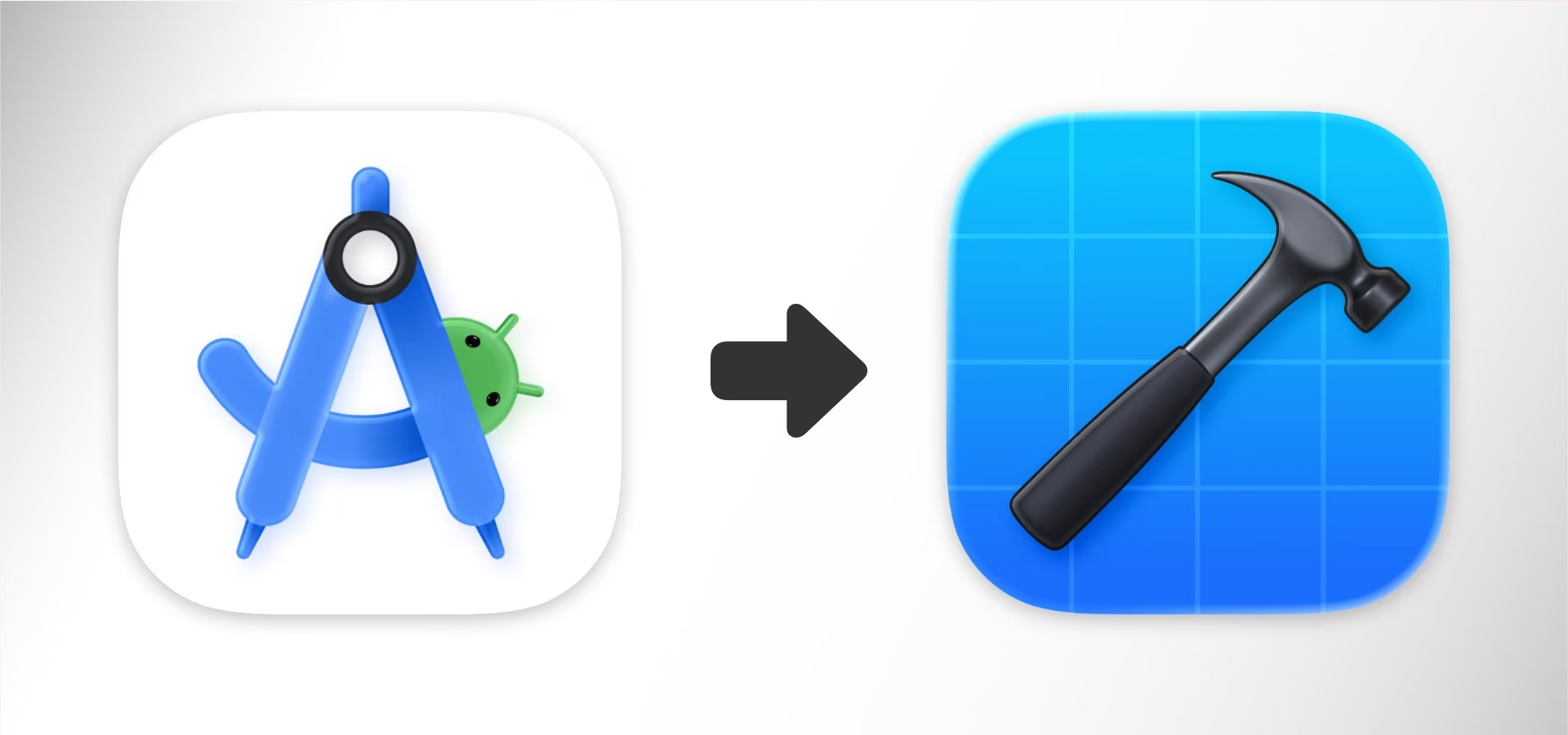
I have been developing apps for the Google Play Store for over ten years. For a long time, it felt like the obvious place for independent developers. It was open, flexible, and fairly easy to work with. You could build something small, publish it quickly, and grow at your own pace.
That experience slowly vanished.
When publishing was simple
In the early years, pushing an app live was straightforward. Reviews were fast. Rules were understandable. If something went wrong, you fixed it and moved on.
Over time, things became slower and heavier. Policies grew vague. Processes became rigid. What once felt developer friendly started to feel punishing.
When rejections stopped making sense
Today, most app rejections feel automated. You receive generic messages that barely explain the problem. When you reply, you often get the same response again, copied straight from a policy page.
Even when a human seems to respond, there is rarely a real conversation. It does not feel like someone has actually reviewed your app or understood your explanation.
You are left guessing what to change, fixing things blindly, and hoping the next submission gets through.
Appeals that feel pointless
Google does offer an appeal process, but it rarely leads anywhere. Appeals are acknowledged, but rarely resolved in a meaningful way. As an indie developer, you quickly realise that your case does not really matter.
Still, I continued.
I updated apps. I rewrote features. I followed new rules. I accepted rejections that made little technical sense. I assumed this was just the cost of doing business on Android.
The payout system that broke the trust
What finally made me stop had nothing to do with app reviews. It was payouts.
Google’s collaboration with BillDesk for payouts, especially for Indian developers, exposed how broken the system really is. BillDesk already has a reputation for poor technology, and the onboarding experience lived up to it.
The payout form frequently failed, especially in Safari. Pages would not load. Sessions expired randomly. Entered data would disappear without warning.
Then came the form itself.
There were dozens of fields to fill. The most frustrating part was being asked to manually enter the name and URL of every app you wanted payouts from. One by one.
And then I hit the limit.
Only ten apps were allowed.
I have more than twenty five.
There was no bulk option. No workaround. No real support. Just a hard limit that made no sense for anyone who has been building apps seriously for years.
Walking away despite success
That was the moment I stopped.
I decided to stop developing for the Google Play Store even though my apps have close to a million downloads combined. Not because they failed, but because the platform did.
Continuing would have meant accepting that my time, effort, and work simply did not matter.
The contrast with the Apple App Store
The difference with Apple’s App Store is impossible to ignore.
Apple’s reviews are handled by real people. When an app is rejected, you usually know why. You can reply, explain your reasoning, and often reach a sensible outcome. Payouts work quietly and reliably, which is exactly how payments should work.
Apple can be strict, and it is not perfect. But it is consistent, clear, and professional.
A question Android developers should ask themselves
If you are an independent Android developer, it is worth asking a simple question.
Why are you still here?
If support is mostly automated, appeals go nowhere, and even getting paid is a struggle, what exactly are you holding on to?
Many developers stay out of habit, scale, or belief in openness. But belief does not pay bills, and scale means very little when the system constantly works against you.
Moving to iOS is not about liking Apple more. It is about choosing sanity over constant friction. It is about working in an environment where rules are strict but clear, support is human, and your time is respected.
I did not leave Android because my apps failed.
I left because the platform failed me.
If more independent developers reach the same conclusion, maybe things will change. Until then, for me, iOS is not just an alternative.
It is the sensible choice.
Ideas by me. Written by AI.
I’m explicit about how I write. The ideas, point of view, and responsibility are mine. AI helps with structure, clarity, and speed.
Why I work this way →Discussion
Your comment will be sent to me privately before being published.